In March 2020 Georgia signed the NACAG Statement of Undertaking and committed to regulation that keeps its nitric acid production permanently equipped with N₂O abatement technology, monitored and reported. That regulation is now in force.
The Law of Georgia on Industrial Emissions, adopted in June 2023 and applied since 1 September 2026, follows the EU Industrial Emissions Directive. Nitric acid production may only operate under an integrated environmental permit: open-ended, based on best available techniques, with emission limits for nitrogen compounds, annual reporting, published monitoring data and regular inspections. In one respect the law goes beyond its EU model: it has no exclusion for greenhouse gases, so an N₂O limit can be written straight into the permit.
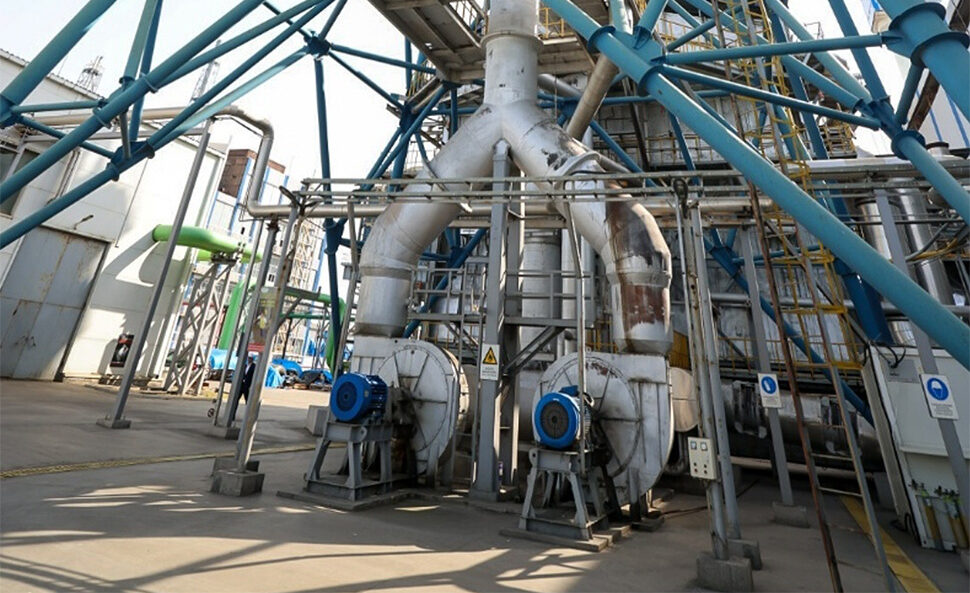
Rustavi Azot, Georgia’s only nitric acid producer, is ahead of the schedule. The abatement and monitoring equipment is installed and operating, with abatement efficiency above 95 percent confirmed in the guarantee test run.
Two steps on the Ministry’s side will make the N2O limit explicit: the government ordinance on best available techniques conclusions required by the law, and the permit conditions for Rustavi Azot, which fall due by 1 September 2030 at the latest. We will follow both through the NACAG policy dialogue. The abatement and monitoring equipment financed under the grant is already installed and operating, so the plant is ahead of the legal schedule.
Our thanks to the Ministry of Environmental Protection and Agriculture and to Rustavi Azot.